When traders search for GOOG stock, they are rarely only asking for Alphabet’s next quarterly print. Large-cap tech is a proxy for global risk appetite. A sharp swing in Google’s parent often travels through Nasdaq futures, the dollar, and — with a lag that varies by regime — into Bitcoin and major altcoins. This article maps how GOOG stock moves can signal crypto risk-on and risk-off conditions, which correlation patterns are worth watching, and how to turn those reads into concrete setups with risk controls. Along the way, we show how MoziAI Trade Radar can surface sector rotation, AI win-rate context, smart alerts, and arbitrage signals when equity volatility spills into crypto.
Why GOOG stock matters for crypto traders
Alphabet sits at the center of the AI and advertising cycle. When GOOG stock rallies on AI capex optimism or resilient ad spend, risk capital tends to stay in growth assets. When GOOG sells off on regulation, margin pressure, or a broad tech de-risking, the same desks often cut beta elsewhere — including crypto. You do not need a perfect day-to-day correlation. You need a repeatable playbook: identify the equity impulse, check whether crypto is confirming or diverging, then act only when both the narrative and the tape align.
Historical correlation: chart-backed intuition, not a guarantee
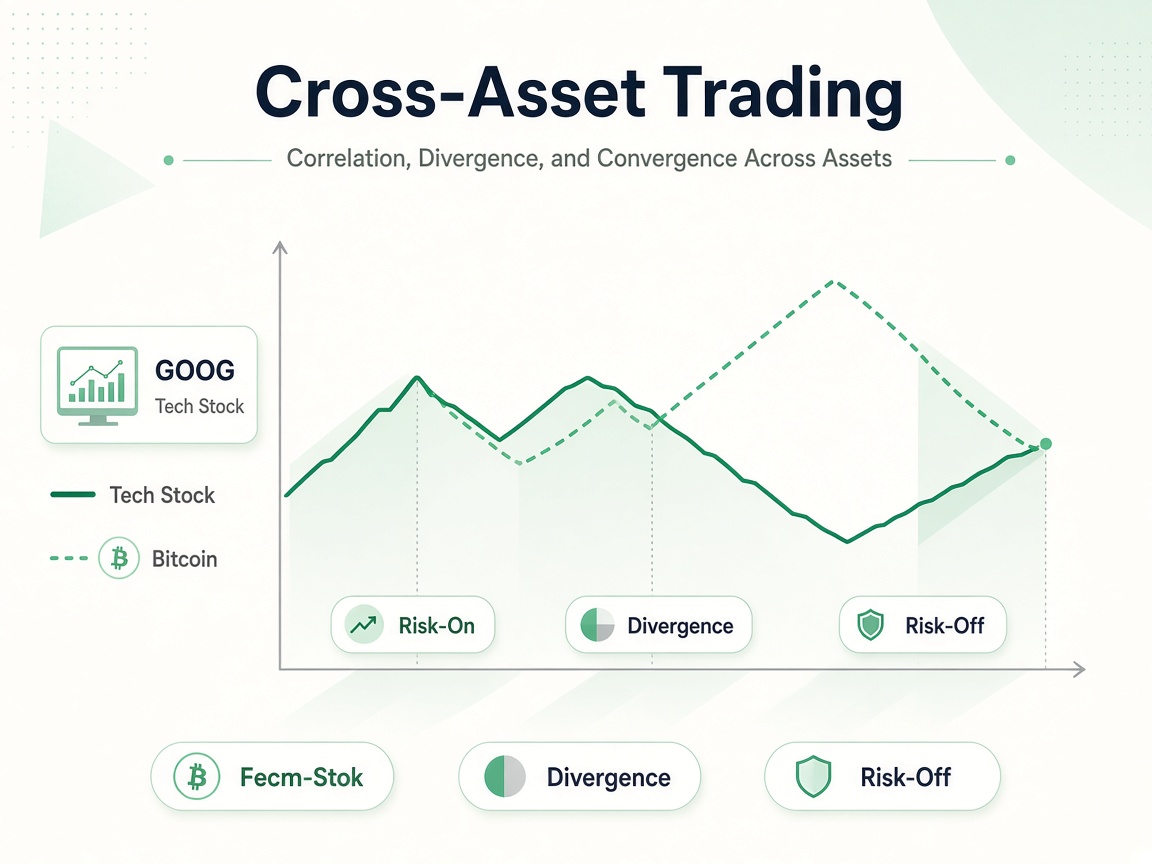
Across several cycles since 2020, Bitcoin has often moved with Nasdaq-heavy names during risk-on expansions and risk-off contractions. GOOG stock is not BTC’s twin, but it is a useful tech-risk thermometer. Shared risk-on: GOOG breaks higher on rising volume while BTC holds above a key moving average and funding is not extremely crowded. Shared risk-off: GOOG gaps down with the Nasdaq; BTC loses intraday support and open interest rises into the decline. Divergence warning: GOOG sells off hard but BTC holds on spot-led bids — equity-driven shorts are weaker. Lag windows: majors may react within hours; altcoins can lag one to three sessions. Confirm on crypto markets rather than assuming yesterday’s correlation still holds.
Actionable setups: entry, exit, and risk
Setup A — Risk-off continuation from GOOG weakness
Trigger: GOOG closes below a watched level on expanding volume while Nasdaq futures confirm. Crypto filter: BTC breaks a session low with rising open interest. Entry: hedge or reduce long beta only after crypto confirmation. Exit: cover if BTC reclaims the level on spot volume; time-stop if there is no follow-through. Risk: keep size small — equity headlines can reverse quickly.
Setup B — Risk-on spillover after GOOG strength
Trigger: GOOG trends up on AI or ad strength with contained market stress. Crypto filter: BTC reclaims a prior day’s high and leadership stays in majors or a clear hot sector. Entry: scale into strength with a stop under the reclaim structure. Exit: trail against structure; cut if funding spikes into euphoria without spot support. Risk: do not chase thin alts only because GOOG is green.
Setup C — Cross-asset arbitrage and basis ideas (advanced)
When equity volatility rises, crypto funding, basis, and cross-exchange spreads often widen. Fees, latency, and liquidation risk still apply. Watch funding extremes after tech-led risk moves, spot–perp basis dislocations, and temporary venue spreads while GOOG-driven headlines hit. Arbitrage Radar helps scan those gaps in real time.
Where MoziAI Trade Radar fits
You still decide; the platform compresses monitoring. Use the Sector Rotation Tracker after a GOOG-led Nasdaq move; the AI Prediction Assistant for win-rate context when equity and crypto align; Smart Alerts for whale or market shifts; and Arbitrage Radar when equity vol spills into funding and spreads. MoziAI is decision support — not custody and not autopilot trading.
A simple checklist before you click
1. What did GOOG actually do (level, volume, Nasdaq confirm)? 2. Is crypto confirming, diverging, or ignoring the move? 3. Do funding, open interest, and sector leadership agree? 4. Is size fit for news risk with a written invalidation? 5. Did a second independent signal confirm the thesis?
Bottom line
GOOG stock is a high-visibility window into tech risk appetite. Traders who demand crypto confirmation, clear exits, and disciplined size avoid trading every Alphabet headline. Pair the framework with sector, alert, and spread context on MoziAI Trade Radar when you want speed without giving up control.